
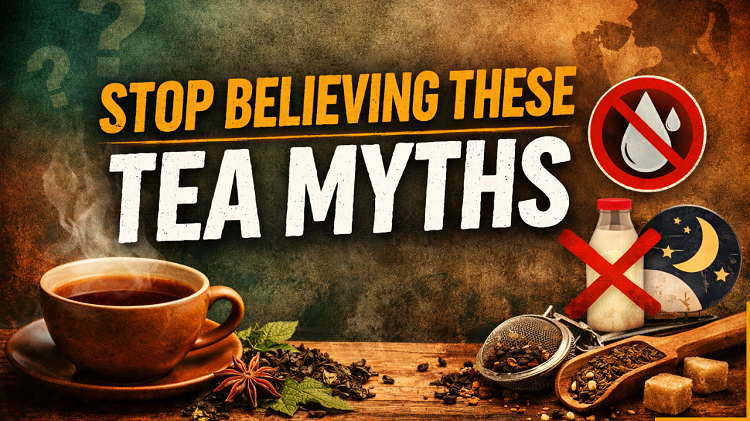
Tea is not just a beverage—it’s an emotion, a daily ritual, and for many, the most comforting part of the day. From early morning chai to late-night conversations over a steaming cup, tea holds a special place in our lives.
Yet, despite being so widely consumed, tea is surrounded by myths, misconceptions, and half-truths that often mislead people. These myths can influence how we drink tea, when we drink it, and even whether we should drink it at all.
It’s time to clear the confusion once and for all.
Myth 1: Tea Dehydrates Your Body
One of the most common myths is that tea dehydrates you because it contains caffeine.
This belief comes from the idea that caffeine acts as a diuretic, meaning it increases urine production. While this is technically true in large amounts, the caffeine content in tea is relatively low compared to coffee.
Reality check:
Tea is made mostly of water. When you drink tea, you are still hydrating your body. Studies have shown that moderate tea consumption contributes positively to your daily fluid intake.
So, instead of avoiding tea for hydration reasons, you can confidently include it as part of your daily fluid consumption.
Myth 2: Drinking Tea on an Empty Stomach Is Dangerous
Many people have been warned against drinking tea first thing in the morning. Some say it causes acidity, while others claim it harms digestion.
The truth is more nuanced.
Tea contains compounds like tannins, which can increase acidity in sensitive individuals. However, this doesn’t mean tea is harmful for everyone.
What really matters:
- Your body type
- The strength of the tea
- Whether you add milk or sugar
For some people, starting the day with tea feels refreshing and energizing. For others, it may cause slight discomfort.
Best approach:
Listen to your body. If strong tea causes issues, switch to lighter tea or have it after a light snack.
Myth 3: The Stronger the Tea, the Better It Is
Many tea lovers believe that a darker, stronger brew equals more health benefits.
In reality, over-brewing tea can do more harm than good.
When tea is steeped for too long:
- It becomes excessively bitter
- It releases too many tannins
- It may irritate the stomach
What actually matters:
The health benefits of tea come from antioxidants like polyphenols—not from how strong it tastes.
A well-balanced cup of tea is both healthier and more enjoyable.
Myth 4: Tea Causes Insomnia
Tea often gets blamed for sleepless nights because of its caffeine content.
But here’s the important detail: tea contains significantly less caffeine than coffee.
What this means:
- A cup of tea provides mild stimulation, not a strong jolt
- Most people can tolerate tea even in the evening
Additionally, there are many caffeine-free options like herbal teas that can actually promote relaxation and better sleep.
So unless you are highly sensitive to caffeine, tea is unlikely to be the reason behind your insomnia.
Myth 5: Adding Milk Ruins All the Benefits of Tea
This myth is especially popular among health-conscious individuals who believe that milk cancels out tea’s antioxidants.
While some studies suggest that milk proteins may slightly affect antioxidant absorption, the overall benefits of tea are still present.
Let’s be realistic:
- Millions of people have enjoyed milk tea for generations
- It still offers comfort, energy, and hydration
- It remains a better alternative to many sugary beverages
So if you love your chai with milk, there’s no need to give it up.
Myth 6: Tea Is Addictive
Tea is often labeled as addictive due to its caffeine content.
However, comparing tea to harmful addictive substances is misleading.
Here’s the truth:
- Tea contains mild caffeine
- It creates a habit, not harmful dependency
- It provides relaxation and mental clarity
Most people drink tea because they enjoy it—not because they are addicted in a harmful way.
Myth 7: All Tea Is the Same
Many people think tea is just tea—one drink with little variation.
In reality, tea is incredibly diverse.
There are multiple types, including:
- Black tea
- Green tea
- Herbal tea
- Masala chai
- Flavored teas like elaichi (cardamom) tea
Each type has:
- A unique taste
- Different preparation methods
- Distinct health properties
Exploring different teas can completely transform your daily tea experience.
Myth 8: Tea Has No Real Health Benefits
Some people believe tea is just a flavored drink with no actual health value.
This couldn’t be further from the truth.
Tea contains:
- Antioxidants that help fight free radicals
- Compounds that support heart health
- Elements that promote digestion and relaxation
While tea is not a “magic cure,” it is certainly a healthier choice compared to many processed beverages.
Myth 9: Tea Should Only Be Drunk at Specific Times
There’s a common belief that tea should only be consumed at certain times—like morning or evening.
In reality, tea is a flexible beverage that fits into your routine based on your lifestyle.
You can enjoy tea:
- In the morning for a gentle start
- During work breaks for refreshment
- In the evening for relaxation
- With snacks or meals
There are no strict rules—only preferences.
Myth 10: Tea Is Just a Simple Drink
Calling tea “just a drink” overlooks its cultural and emotional significance.
Tea is:
- A part of daily life
- A social connector
- A business opportunity
- A symbol of comfort and hospitality
In India especially, tea is deeply woven into everyday experiences—from roadside stalls to modern cafés.
Final Thoughts
Tea has been part of human culture for centuries, yet myths continue to shape how people perceive it. By understanding the truth behind these misconceptions, you can enjoy tea more confidently and make better choices about how you consume it.
At the end of the day, tea is not just about health—it’s about comfort, connection, and consistency.
So the next time you sip your favorite cup, remember—you’re not just drinking tea, you’re part of a timeless tradition.
Turn Your Love for Tea Into a Profitable Business ☕
If tea plays such an important role in everyday life, it also presents a powerful business opportunity.
With the growing demand for quality tea experiences, starting a tea business today can be both rewarding and profitable. Whether it’s a small outlet or a full-scale café-style setup, the potential is huge—especially in a tea-loving country like India.
That’s where Tea Adda comes in.
Tea Adda offers a complete tea shop franchise model designed for aspiring entrepreneurs. From setup and branding to operations and support, everything is structured to help you succeed—even if you’re new to business.
If you’ve ever dreamed of owning your own tea outlet, now is the perfect time to take the first step.
👉 Explore the opportunity here:
https://www.teaadda.co.in/tea-shop-franchise-bangalore
Start your journey today and turn every cup of tea into a step toward your success.
