
Introduction
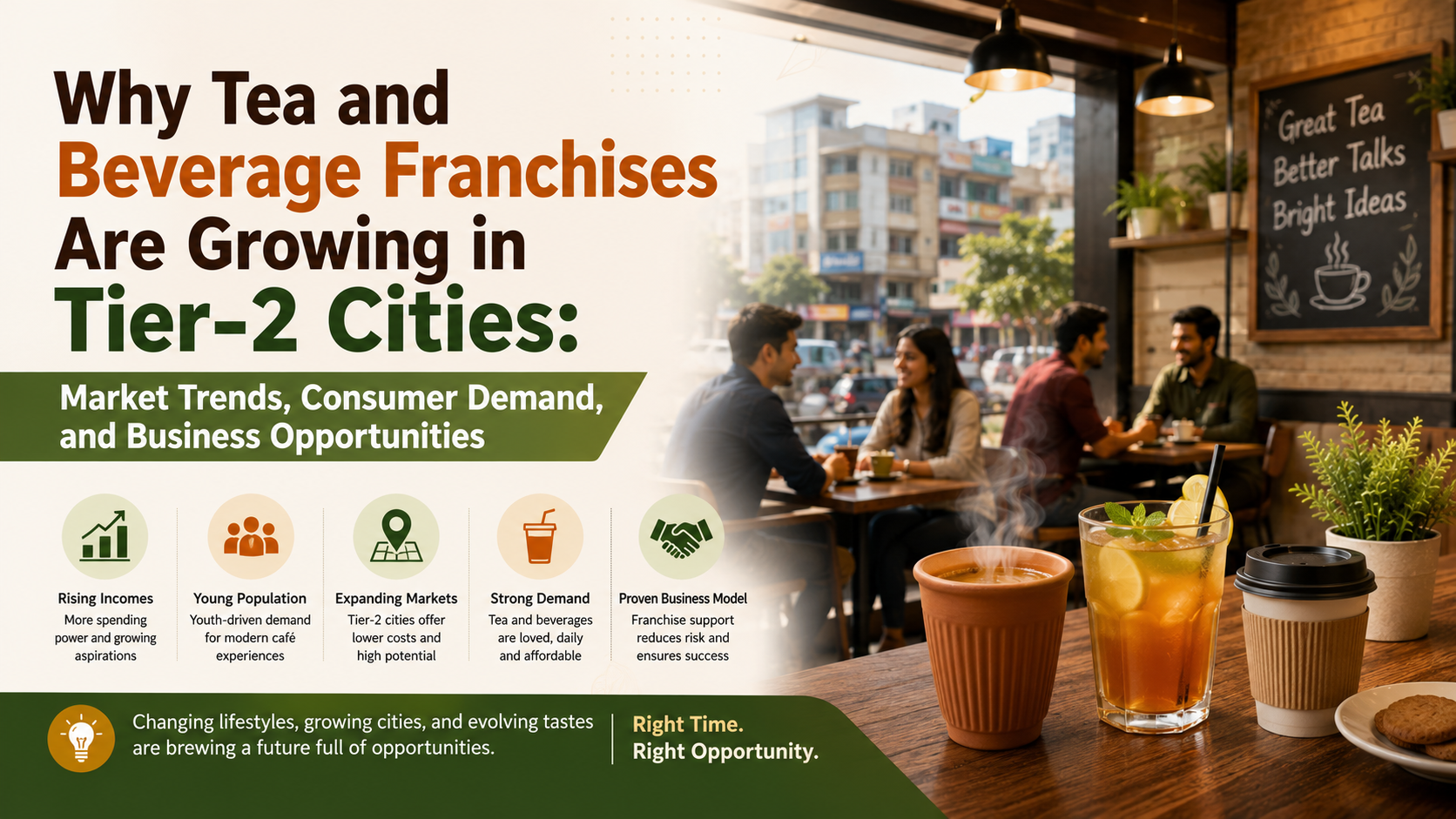
For many years, India’s food and beverage brands focused mainly on metropolitan cities such as Bengaluru, Mumbai, Delhi, Hyderabad, and Chennai. These cities offered high customer traffic and strong purchasing power. Today, however, the growth story has shifted. Tier-2 cities are becoming the preferred destination for tea cafés, beverage outlets, and quick-service franchise businesses.
From Indore and Surat to Coimbatore, Lucknow, Bhubaneswar, Nagpur, and Mysuru, consumers are embracing organized café experiences. Industry reports indicate that many restaurant and café brands are actively planning expansion into Tier-2 and Tier-3 markets because of lower operating costs, rising incomes, and growing demand for branded food and beverage experiences.
This shift is creating exciting opportunities for entrepreneurs who want to enter the growing tea and beverage business.
The Rise of Tier-2 Cities
Tier-2 cities have experienced rapid economic development over the past decade. Better infrastructure, improved connectivity, expanding educational institutions, IT parks, and industrial growth have increased employment and disposable income.
As more people choose to live and work in these cities, demand for modern cafés and beverage outlets continues to grow.
Consumers now seek places where they can enjoy tea, coffee, snacks, and conversations in a clean and comfortable environment.
Lower Operating Costs Create Better Business Opportunities
One of the biggest advantages of Tier-2 cities is lower business expenses.
Compared with metropolitan cities, entrepreneurs often benefit from:
- Lower commercial rents
- Reduced employee costs
- Affordable utility expenses
- Lower setup costs
- Less competition
These factors allow franchise businesses to operate more efficiently while maintaining healthy profit margins. Industry analysts also note that lower occupancy costs make expansion into smaller cities increasingly attractive.
Growing Demand for Branded Tea Cafés
Tea has always been India’s favorite beverage.
What has changed is the way customers consume it.
Instead of only visiting roadside tea stalls, many consumers now prefer organized tea cafés offering:
- Premium chai
- Green tea
- Herbal tea
- Iced tea
- Coffee
- Fresh snacks
- Comfortable seating
- Hygienic preparation
Modern tea cafés combine traditional flavors with a contemporary café experience, attracting students, professionals, families, and travelers alike.
Young Consumers Are Driving Growth
Young adults play a major role in the expansion of beverage franchises.
College students and young professionals frequently use cafés as places to:
- Meet friends
- Study
- Work remotely
- Hold casual meetings
- Relax after work
Social media has also influenced customer expectations, making attractive interiors, quality beverages, and consistent service important factors in choosing where to spend time.
Better Infrastructure Supports Expansion
Tier-2 cities have improved significantly in recent years.
Many now offer:
- Modern shopping centers
- Commercial complexes
- Residential communities
- IT parks
- Improved highways
- Better public transport
This infrastructure makes it easier for organized franchise businesses to establish new outlets and serve growing customer populations.
LinkedIn’s recent “Cities on the Rise” report also highlighted several Tier-2 cities as fast-growing employment hubs, reflecting broader economic momentum beyond India’s largest metros.
Digital Payments and Food Delivery Are Accelerating Growth
Technology has transformed how beverage businesses operate.
Customers increasingly expect:
- UPI payments
- QR-code transactions
- Online ordering
- Home delivery
- Digital loyalty programs
These services improve convenience while helping franchise businesses reach customers beyond their physical locations.
Food delivery platforms have also increased visibility for local cafés and beverage outlets.
Why Entrepreneurs Prefer Beverage Franchises
Starting an independent café requires significant planning, branding, menu development, and marketing.
Franchise businesses simplify this process by offering:
- Established brand identity
- Standard operating procedures
- Staff training
- Marketing support
- Vendor networks
- Business guidance
These advantages help reduce startup challenges while allowing entrepreneurs to focus on customer service and daily operations.
Tea Franchises Have Strong Long-Term Potential
Unlike seasonal businesses, tea enjoys consistent demand throughout the year.
People consume tea:
- Before work
- During office breaks
- After meals
- While traveling
- During social gatherings
This steady demand provides a reliable customer base, making tea businesses attractive for long-term investment.
Recent industry analysis also points to Tier-2 and Tier-3 cities as the fastest-growing markets for organized tea franchises because of lower operating costs and increasing demand.
Future Trends in the Beverage Industry
The beverage industry continues to evolve.
Some emerging trends include:
- Organic tea
- Wellness beverages
- Sugar-free drinks
- Sustainable packaging
- Premium tea blends
- Digital ordering
- Customer loyalty apps
Businesses that adapt to these changing preferences are likely to remain competitive in the coming years.
Frequently Asked Questions
Why are tea franchises expanding into Tier-2 cities?
Lower operating costs, rising incomes, growing consumer demand, and expanding infrastructure make Tier-2 cities attractive for organized beverage brands.
Are Tier-2 cities suitable for first-time entrepreneurs?
Yes. Many franchise businesses provide operational support and training, making them accessible to entrepreneurs with limited business experience.
Why are customers choosing branded tea cafés?
Customers value hygiene, consistent taste, comfortable seating, and reliable service offered by organized tea cafés.
Is the beverage industry expected to continue growing?
Yes. Changing lifestyles, urban development, digital adoption, and rising demand for café experiences continue to support long-term growth in India’s beverage industry.
Conclusion
The expansion of tea and beverage franchises into Tier-2 cities represents one of the biggest changes in India’s food and beverage industry. Lower business costs, increasing purchasing power, better infrastructure, and changing consumer lifestyles have created an environment where organized tea cafés can thrive.
For entrepreneurs, this shift offers an opportunity to enter a growing industry with the support of an established franchise model. Success, however, depends on choosing the right location, maintaining product quality, delivering excellent customer service, and adapting to local customer preferences.
If you’re exploring opportunities to start a tea café business, you can learn more about the Tea Adda Tea Shop Franchise in Bangalore. The page provides information about the franchise model, investment requirements, training, and business support for aspiring entrepreneurs.
👉 https://www.teaadda.co.in/tea-shop-franchise-bangalore
