
Walk into any street in India at sunrise.
You will hear the whistle of a pressure cooker, the distant sound of a temple bell, and somewhere nearby, the familiar call:
“Ek chai dena.”
Before offices open, before schools begin, before the rush of the day takes over, millions of Indians start their morning with a simple cup of tea.
For outsiders, it may seem like just another beverage.
For Indians, tea is something much bigger.
It is a habit, a comfort, a tradition, a friendship, a break from stress, and sometimes even the beginning of life-changing conversations.
The story of tea in India is not merely about leaves, milk, sugar, and spices.
It is the story of people.
And perhaps that is why every great conversation in India starts with a cup of tea.
Tea Is the Social Currency of India
Imagine meeting an old friend after many years.
What is the first thing you ask?
“Shall we have tea?”
When guests arrive unexpectedly at home, tea appears before questions.
When colleagues need a break from work, they gather around tea.
When families discuss important decisions, tea is usually sitting in the middle of the table.
Tea has become India’s most accepted invitation.
It asks for nothing.
It creates no pressure.
It simply brings people together.
Unlike expensive dinners or formal meetings, tea is accessible to everyone.
A businessman drinking chai at a luxury café and a worker enjoying tea at a roadside stall share something surprisingly similar.
For a few minutes, both are simply enjoying a moment of peace.
The Five-Minute Break That Changes Everything
Modern life is faster than ever.
Phones ring constantly.
Emails never stop.
Deadlines keep growing.
People often feel they are running all day without truly pausing.
Yet something interesting happens when tea enters the picture.
People slow down.
A five-minute tea break becomes a small escape from the chaos.
Conversations become easier.
Ideas begin to flow.
Problems suddenly seem more manageable.
Many successful business partnerships have started over tea.
Countless friendships have been strengthened during tea breaks.
Even some of life’s biggest decisions have been discussed while holding a warm cup of chai.
Tea creates space.
And sometimes space is exactly what people need.
Why Tea Feels Like Home
There is a reason people become emotional about tea.
The aroma often reminds them of childhood.
Perhaps it brings back memories of rainy afternoons with grandparents.
Maybe it reminds them of studying late at night during exams.
For others, it recalls train journeys, college canteens, or conversations with loved ones.
Tea carries memories.
A single sip can transport someone back ten or twenty years.
Few beverages have that power.
Coffee may energize people.
Soft drinks may refresh them.
But tea often connects them to a feeling.
And that feeling is home.
The Unofficial Office of India
Across the country, tea stalls perform an extraordinary role.
They are not just places that sell tea.
They are discussion rooms.
Newsrooms.
Networking spaces.
Idea factories.
A small tea counter near an office often becomes the location where employees discuss projects.
College students exchange dreams and ambitions there.
Local residents discuss politics, cricket, and community news.
In many ways, tea stalls are among India’s most democratic spaces.
Everyone is welcome.
Everyone has a voice.
Everyone gets the same cup.
Tea and the Art of Listening
One of the most overlooked benefits of tea is that it encourages people to listen.
When people sit down for tea, they rarely rush.
The experience naturally slows the pace of conversation.
People become more patient.
More attentive.
More open.
In a world dominated by notifications and distractions, this simple act has become surprisingly valuable.
Tea doesn’t just help people talk.
It helps them hear each other.
And that may be one of the reasons meaningful conversations often happen around tea.
How Tea Became Part of Indian Identity
Over time, tea moved beyond being a beverage.
It became a cultural symbol.
Today, tea appears in:
- Family gatherings
- Business meetings
- Festivals
- Road trips
- Wedding preparations
- College memories
- Workplace breaks
Few products achieve this level of emotional connection.
People do not simply consume tea.
They experience it.
Every region has its own version.
Every family has its own recipe.
Every individual has their own preference.
Yet somehow tea remains a shared language understood by everyone.
The Future of Tea Is About Experience
Today’s generation is changing how tea is consumed.
They still love traditional masala chai.
But they also enjoy:
- Kulhad chai
- Herbal infusions
- Iced teas
- Fusion beverages
- Café-style tea experiences
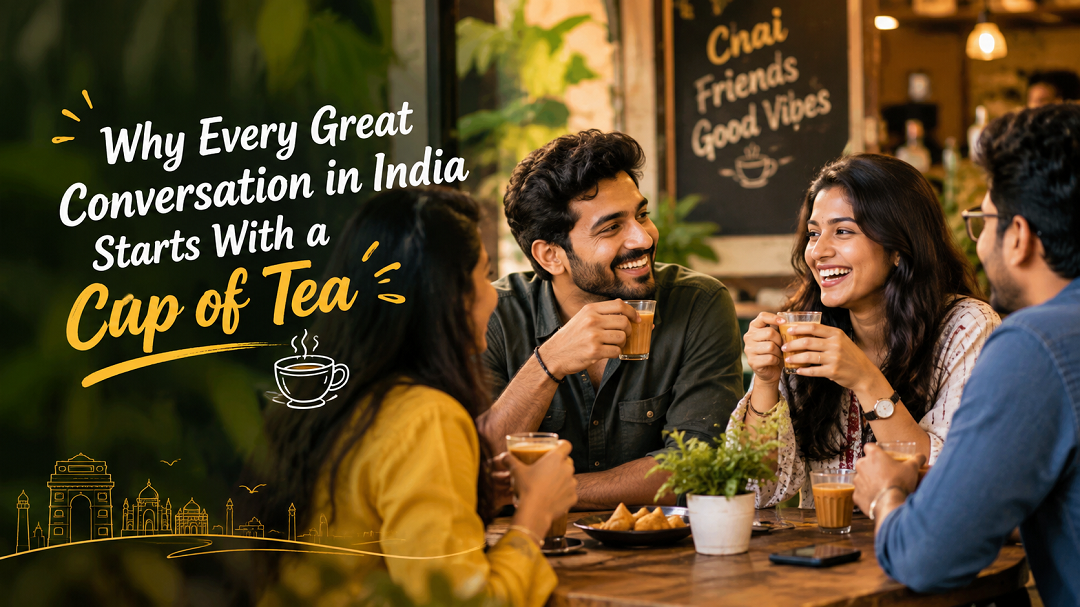
Modern tea cafés are becoming community spaces where people work, socialize, relax, and create memories.
The future of tea is not just about what is served in the cup.
It is about the experience surrounding it.
People increasingly seek places where they can pause, connect, and enjoy genuine conversations.
Tea naturally delivers that experience.
A Cup That Brings People Together
Technology has changed almost everything.
The way people communicate.
The way they shop.
The way they work.
Yet one thing remains surprisingly unchanged.
People still gather around tea.
They still share stories over tea.
They still celebrate victories and discuss challenges over tea.
Perhaps this is because tea offers something technology cannot.
Human connection.
A cup of tea may seem small.
But throughout India, it continues to create moments that matter.
Friendships begin over tea.
Ideas grow over tea.
Families bond over tea.
Conversations flourish over tea.
And that is why, even in a rapidly changing world, every great conversation in India still starts with a cup of tea.
Experience the Warmth of Every Sip
If you believe tea is more than just a drink, visit Tea Adda—where every sip feels like home. Explore the menu, discover nearby outlets, or learn more about the Tea Addda story at https://www.teaadda.co.in/.
