
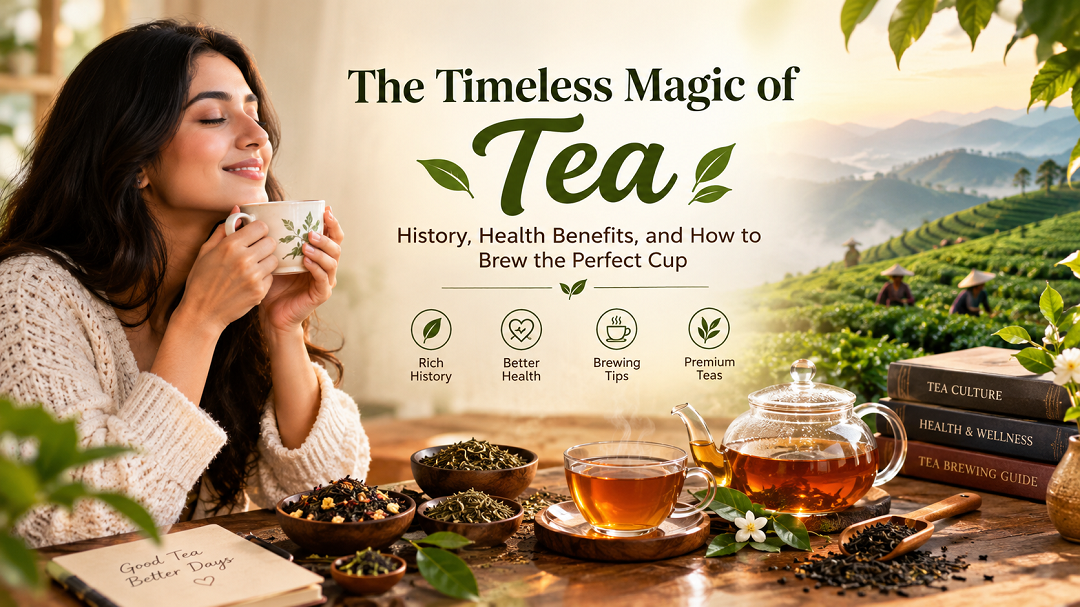
Introduction
Tea is more than just a beverage—it’s an experience that connects people, cultures, and traditions across generations. From a refreshing morning cup to an evening conversation with family, tea has become an essential part of daily life for millions of people around the world.
India, one of the world’s largest tea producers, has transformed tea into a cultural tradition. Whether it’s a strong cup of masala chai, delicate green tea, or aromatic loose-leaf tea, every brew has its own unique personality.
Beyond its comforting taste, modern research suggests that tea contains beneficial plant compounds called polyphenols, which may support heart health, brain function, and overall wellness, although many specific health claims are still being studied.
Let’s explore why tea continues to be one of humanity’s favorite drinks.
The Fascinating History of Tea


Tea’s story began over 5,000 years ago. According to traditional Chinese legend, Emperor Shen Nong accidentally discovered tea around 2737 BCE when tea leaves drifted into his boiling water. Whether legend or history, tea soon became deeply rooted in Chinese culture before spreading across Asia and eventually the rest of the world.
Tea’s Journey to India
Although tea plants naturally grew in parts of northeast India, especially Assam, large-scale tea cultivation expanded during the British colonial period. Today, Indian teas—particularly Assam, Darjeeling, and Nilgiri—are recognized worldwide for their exceptional flavor and quality.
Today, tea is grown in over 60 countries, and millions of farmers depend on the tea industry for their livelihood.
What Makes Tea So Special?
All traditional teas come from a single plant:
Camellia sinensis
The same plant produces black, green, white, and oolong teas through different processing methods.
The difference between black, green, white, and oolong tea comes from how the leaves are processed, not from different plants.
Tea naturally contains:
- Polyphenols (powerful antioxidants)
- Catechins
- Theaflavins
- L-theanine
- Caffeine
- Natural aromatic compounds
These components contribute to tea’s flavor, aroma, and potential health benefits.
Popular Types of Tea

Black Tea
Bold, rich, and perfect for milk tea or masala chai. Black tea develops deep flavors through oxidation.

Green Tea
Minimally processed, fresh, and grassy with higher levels of catechins like EGCG.

White Tea
Made from young buds, offering a delicate, naturally sweet flavor.

Oolong Tea
Partially oxidized, balancing the freshness of green tea with the richness of black tea.
7 Amazing Health Benefits of Tea
1. Rich in Antioxidants
Tea contains polyphenols that help protect cells from oxidative stress, making antioxidants one of the most studied reasons tea is associated with overall wellness.
2. May Support Heart Health
Research suggests that regular tea consumption is associated with improved heart health markers, including healthy blood pressure and cholesterol levels, though more long-term studies are needed.
3. Helps Improve Focus
Tea offers a unique combination of caffeine and L-theanine, which may help improve alertness while promoting a calmer feeling than coffee for many people.
4. May Support Healthy Metabolism
Some studies indicate that green tea may help support metabolism and fat oxidation, but it should not be considered a miracle weight-loss solution.
5. Supports Brain Health
Researchers continue studying tea’s role in healthy aging and cognitive function. Early findings are promising but not yet conclusive.
6. A Healthier Alternative to Sugary Drinks
Unsweetened tea provides flavor without added sugar, making it an excellent everyday beverage choice.
7. A Daily Moment of Relaxation
Tea rituals encourage slowing down, enjoying conversations, and creating mindful moments throughout the day.
Is Hot Tea Better Than Cold Tea?


Recent research indicates that hot brewed tea generally contains more antioxidants than cold-brewed iced tea because heat extracts more beneficial compounds from the leaves. However, both can be healthy options when consumed without excess sugar.
The Art of Brewing the Perfect Cup


Great tea deserves proper brewing.
|
Tea Type |
Water Temperature |
Steeping Time |
|---|---|---|
|
Green Tea |
70–80°C |
2–3 min |
|
White Tea |
75–85°C |
3–5 min |
|
Oolong Tea |
85–90°C |
3–5 min |
|
Black Tea |
90–100°C |
3–5 min |
Pro Tips
- Use fresh filtered water.
- Avoid over-steeping.
- Prefer loose-leaf tea for fuller flavor.
- Let extremely hot tea cool slightly before drinking, as very hot beverages may increase the risk of esophageal injury over time.
Why Loose Leaf Tea is Worth Trying


Loose-leaf tea often provides:
- Better aroma
- Fuller flavor
- Larger whole leaves
- A more authentic tea experience
Many tea enthusiasts prefer it because the leaves have more room to expand during brewing.
Tea and Indian Culture


Few countries celebrate tea quite like India.
Tea is woven into everyday life:
- Morning chai with newspapers
- Office tea breaks
- Railway station chai
- Family gatherings
- Festive celebrations
Popular Indian tea regions include:
- Assam – bold and malty
- Darjeeling – floral and delicate
- Nilgiri – smooth and aromatic
Each region offers a unique flavor shaped by climate, soil, and altitude.
Choosing High-Quality Tea
When buying tea online, look for:
- Whole leaves
- Fresh aroma
- Proper packaging
- Clearly mentioned origin
- Trusted sellers with quality-focused sourcing
Freshness makes a noticeable difference in every cup.
Common Tea Myths
Myth 1: Green Tea Cures Everything
False. Green tea offers promising health benefits, but it is not a cure for diseases.
Myth 2: Black Tea Has No Benefits
False. Black tea also contains beneficial compounds called theaflavins that contribute to its potential health effects.
Myth 3: More Tea Means More Benefits
Not necessarily. Moderate consumption is generally considered appropriate for most healthy adults, especially when caffeine intake is taken into account.
The Future of Tea
Tea continues evolving with changing consumer preferences.
Growing trends include:
- Premium loose-leaf teas
- Wellness blends
- Sustainable packaging
- Organic cultivation
- Artisan tea experiences
Yet despite these innovations, tea’s greatest strength remains unchanged—it brings people together.
Experience Premium Tea with Tea Adda
Every cup tells a story, and at Tea Adda, we believe your tea should be as memorable as the moments you share around it.
Whether you’re looking for rich Assam tea, refreshing green tea, aromatic blends, or premium loose-leaf selections, Tea Adda is dedicated to bringing carefully selected teas straight to your cup.
Why Choose Tea Adda?
- Premium-quality tea selections
- Fresh and carefully packed products
- Authentic Indian tea experience
- Convenient online shopping
- Perfect for daily tea lovers and thoughtful gifting
Discover your next favorite cup at Tea Adda.
Visit: www.teaadda.co.in and experience the true taste of exceptional tea.
“Because every great conversation begins with a great cup of tea.” 🍵
