


Introduction
Every morning, millions of Indians begin their day with a simple ritual—a hot cup of chai. Whether it’s roadside cutting chai, office tea breaks, homemade masala chai, or premium Assam loose-leaf tea, tea is deeply woven into India’s culture.
But behind every cup is an industry currently facing serious challenges.
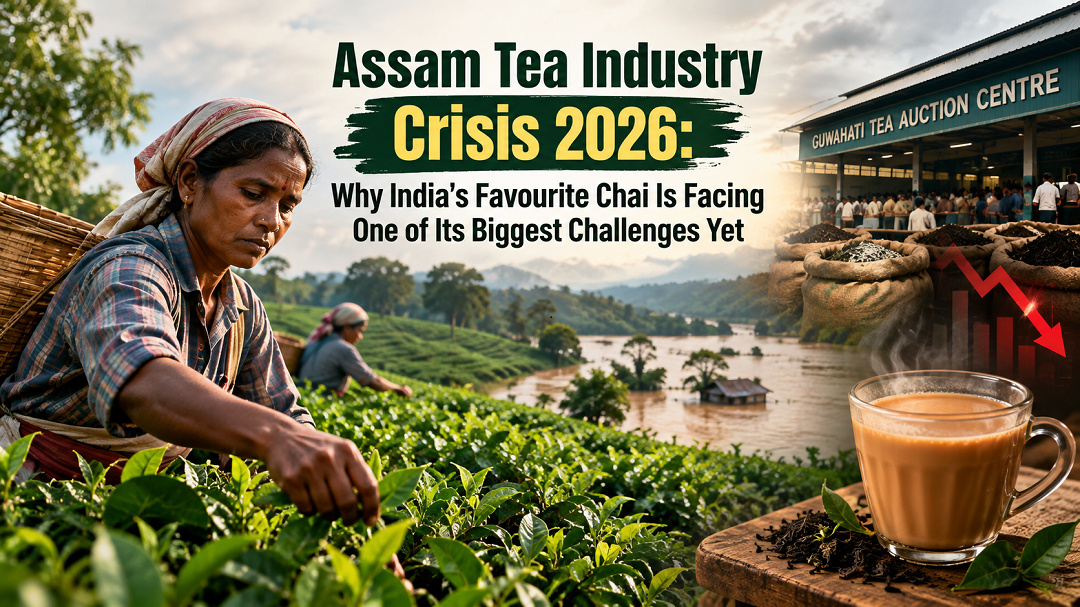
The Assam tea industry, one of the world’s most important tea-producing regions, is going through a difficult period marked by falling auction prices, unpredictable weather, floods, pest attacks, and increasing production costs. At the same time, the industry is also seeing new government initiatives aimed at strengthening exports and supporting tea businesses.
This isn’t just a story about farmers or tea estates.
It affects tea lovers, retailers, café owners, tea entrepreneurs, and everyone involved in India’s ₹50,000+ crore tea economy.
In this detailed guide, we’ll explore:
- Why Assam tea is globally famous
- What caused the current tea industry crisis
- How climate change is changing tea farming
- Why tea auction prices are falling
- What government support means for the industry
- Future opportunities for tea businesses
- Why now may actually be the right time to enter the tea business
Let’s begin.
The Legacy of Assam Tea


Assam is not just another tea-producing state.
It is considered the heart of India’s black tea production.
Located along the fertile Brahmaputra Valley, Assam produces strong, bold, and malty tea that has become famous across the world.
Unlike delicate Darjeeling tea, Assam tea is known for:
- Rich flavour
- Deep amber colour
- Strong body
- Excellent pairing with milk
- Perfect taste for masala chai
These characteristics make Assam tea the preferred choice for:
- Household tea
- Hotels
- Restaurants
- Tea cafés
- Street tea vendors
- Tea bags
- Premium breakfast blends
The region has ideal conditions for tea cultivation:
- Heavy rainfall
- Warm climate
- Nutrient-rich soil
- Long growing season
These natural advantages have helped Assam become one of the world’s largest tea-growing regions.
Why Assam Tea Is Important to India’s Economy


The tea industry is much bigger than most people realise.
It supports:
- Millions of workers
- Thousands of small tea growers
- Tea factories
- Export businesses
- Transport companies
- Packaging industries
- Tea cafés and retailers
India itself is one of the world’s largest tea-consuming countries, and a significant portion of Assam’s production reaches domestic markets before finding its way to international buyers.
For many rural communities, tea isn’t simply a crop.
It is their primary livelihood.
What Is Happening in 2026?


The biggest story affecting the tea industry today is the sharp decline in auction prices.
According to industry reports, North Indian tea auction prices have fallen by around 17%, creating enormous pressure on producers already struggling with rising costs.
This creates an unusual situation.
Normally, when production becomes difficult, prices increase.
Instead, producers are facing both:
- Lower selling prices
- Higher production expenses
This combination has become one of the industry’s biggest concerns.
Why Tea Auction Prices Are Falling


To understand the crisis, we first need to understand how tea is sold.
Most tea estates don’t sell directly to consumers.
Instead, tea usually passes through auctions before reaching wholesalers and retailers.
The Guwahati Tea Auction Centre is one of the busiest tea trading centres in the world and handles enormous volumes of Assam CTC tea every year.
Several factors are pushing prices downward.
1. Weak Market Demand
Auction participation has slowed for certain grades of tea.
Lower competition among buyers often results in reduced auction prices.
2. Rising Production Costs
Tea estates continue spending more on:
- Labour
- Fertilisers
- Transportation
- Pest management
- Factory operations
Even if prices fall, these expenses don’t disappear.
3. Quality Challenges
Extreme weather has affected leaf quality in some regions.
Premium-quality leaves generally command better prices, so quality fluctuations can influence earnings.
Climate Change Is Reshaping Tea Farming


Tea plants are surprisingly sensitive.
Small changes in weather can dramatically affect flavour, yield, and quality.
Today’s growers face multiple environmental challenges simultaneously.
Heavy Floods
Assam regularly receives significant rainfall.
However, flash floods have become increasingly disruptive.
Floodwater can:
- Damage roots
- Delay harvesting
- Wash away nutrients
- Reduce productivity
Extreme Heat
Tea bushes perform best within specific temperature ranges.
When temperatures rise too high:
- Leaves become stressed.
- Tender shoots become fewer.
- Premium-quality harvesting becomes harder.
Pest Outbreaks
Warmer conditions also create favourable environments for insects and plant diseases.
This forces estates to spend more on crop protection while managing lower productivity.
Together, these challenges make every kilogram of tea more expensive to produce.
The Human Side of the Tea Industry


Behind every packet of tea are thousands of workers.
Tea gardens employ people across multiple roles:
- Leaf pluckers
- Factory workers
- Sorters
- Drivers
- Maintenance staff
- Supervisors
For many families, tea estates provide generations of employment.
Despite industry challenges, there has been encouraging news.
Recently, 73 Assam tea estates announced a 20% Durga Puja bonus for workers, offering financial support ahead of one of the region’s biggest festivals.
This highlights how important worker welfare remains within the tea sector.
How Tea Travels from Garden to Cup


Most consumers never see the journey behind their cup.
The process involves several stages.
Step 1: Plucking
Only the youngest leaves are selected.
Workers carefully harvest fresh shoots to maintain quality.
Step 2: Withering
Fresh leaves lose excess moisture.
Step 3: Rolling
Leaves are rolled to release natural oils.
Step 4: Oxidation
This stage develops colour and flavour.
Step 5: Drying
Moisture is removed for long-term storage.
Step 6: Grading
Tea is sorted into different grades.
Step 7: Auction
Large quantities are sold to buyers.
Step 8: Packaging
Brands package tea for retail consumers.
Every cup involves remarkable craftsmanship long before reaching the kettle.
Why Assam Tea Tastes Different


Many tea lovers ask:
“Why does Assam tea taste stronger?”
Several factors contribute.
Soil
Floodplain soil is rich in minerals.
Climate
Warm temperatures encourage rapid growth.
Rainfall
Abundant rainfall supports vigorous tea bushes.
Tea Variety
Assam primarily grows Camellia sinensis var. assamica, known for producing strong, full-bodied tea.
Challenges Facing Small Tea Growers
Large estates often receive attention.
But small growers face unique problems.
Many struggle with:
- Limited processing facilities
- Market access
- Rising costs
- Weather uncertainty
- Price volatility
For smaller producers, even minor price reductions can significantly affect annual income.
Supporting local tea businesses becomes increasingly important during such periods.
The Rise of Premium Tea Culture


Interestingly, while traditional producers face challenges, consumer preferences are evolving.
People increasingly want:
- Loose-leaf tea
- Single-estate tea
- Authentic regional tea
- Health-focused tea
- Premium brewing experiences
This creates exciting opportunities for tea entrepreneurs.
Instead of competing only on price, businesses can compete through:
- Quality
- Experience
- Storytelling
- Authentic sourcing
Tea Business Opportunities in India


The tea business continues expanding beyond traditional retail.
Popular business models include:
- Tea cafés
- Kiosks
- Highway tea outlets
- Corporate tea counters
- Premium loose-leaf stores
- Tea gift boxes
- Franchise tea outlets
Consumers today aren’t just buying tea.
They’re buying an experience.
Comfortable seating, creative flavours, hygienic preparation, and Instagram-worthy presentation all influence customer choices.
Government Support Offers New Hope


Despite current difficulties, there are encouraging developments.
The Assam Government recently introduced a revised incentive scheme designed to strengthen tea businesses, improve exports, and increase the importance of the Guwahati Tea Auction Centre. Industry leaders have welcomed the initiative as a positive step toward improving competitiveness.
Such measures may help create stronger long-term foundations for the industry.
What Consumers Can Do
Tea lovers play an important role.
Simple choices can support India’s tea ecosystem.
Consider:
- Buying authentic Indian tea
- Choosing quality over extremely cheap products
- Exploring loose-leaf tea
- Supporting trusted tea businesses
- Learning about tea origins
Every purchase helps sustain an industry that supports millions of livelihoods.
The Future of India’s Tea Industry
The current challenges are real.
Climate uncertainty.
Price fluctuations.
Production pressures.
Changing markets.
Yet India’s tea story is far from over.
The industry has survived centuries of change.
Today’s transformation may actually encourage:
- Better farming practices
- Premium branding
- Stronger exports
- Sustainable cultivation
- Innovative tea businesses
Consumers are becoming more curious.
They want better tea.
They want authentic experiences.
And that creates enormous opportunities for entrepreneurs willing to build modern tea brands.
Why This Matters for Tea Entrepreneurs
If you’ve ever dreamed of entering the food and beverage industry, this is an interesting time.
While tea production faces challenges, tea consumption remains deeply rooted in Indian culture.
People continue drinking tea:
- Before work
- During office breaks
- With friends
- During travel
- After meals
- During evening conversations
Unlike many seasonal businesses, tea enjoys year-round demand.
That makes tea cafés and branded tea outlets attractive business opportunities when executed with quality, consistency, and customer experience in mind.
Start Your Tea Business with Tea Adda


If reading about India’s tea industry has inspired you to become part of this growing tea culture, Tea Adda offers an exciting opportunity to start your own tea business.
Why choose Tea Adda?
- Established tea café concept
- Premium chai and beverage menu
- Modern café experience
- Support for new entrepreneurs
- Business setup guidance
- Branding and operational assistance
Whether you’re planning your first café or looking to expand your business portfolio, Tea Adda’s franchise model is designed to help entrepreneurs enter one of India’s most loved beverage markets.
Tea Shop Franchise in Bangalore
Bangalore has become one of India’s fastest-growing café markets, with professionals, students, and families creating consistent demand for quality tea experiences throughout the day.
If you’re interested in opening a Tea Adda outlet, explore our Tea Shop Franchise in Bangalore page to learn about investment, support, and how you can become part of the Tea Adda family.
Visit: TeaAdda.co.in → Tea Shop Franchise in Bangalore
Frequently Asked Questions (FAQ)
Why are Assam tea prices falling?
North Indian tea auction prices have fallen due to weaker auction demand, weather-related production challenges, and rising costs affecting tea estates.
Is Assam tea still good quality?
Yes. Assam remains famous for its bold, malty black tea, although weather conditions can affect quality in certain seasons.
How does climate change affect tea?
Floods, excessive heat, irregular rainfall, and pest outbreaks can reduce tea yields and increase production costs.
Is tea still a good business opportunity?
Yes. Tea continues to enjoy strong daily demand across India, while premium tea cafés and branded tea experiences are creating new opportunities for entrepreneurs.
What makes Assam tea different?
Assam tea is known for its strong body, rich flavour, bright colour, and excellent suitability for milk tea and masala chai, thanks to its unique climate, fertile soil, and tea variety.
Final Thoughts
The story behind every cup of tea is much larger than most people imagine. From the mist-covered gardens of Assam to bustling tea cafés in cities like Bangalore, the tea industry connects farmers, workers, traders, entrepreneurs, and millions of tea lovers every single day.
While today’s challenges are significant, they also highlight the resilience and innovation that have kept India’s tea culture alive for generations.
And for those who dream of turning their passion for tea into a business, this evolving landscape may offer some of the most exciting opportunities yet—with Tea Adda ready to help bring that vision to life.
