
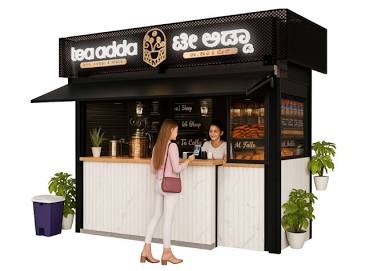
Whether in food and beverage (F&B), healthcare, education, or specialized services, entrepreneurship through franchising provides a proven framework with lower risk, established operational playbooks, and immediate brand recognition.
Key Industry Milestones & Market Snapshot
| Metric | Status / Target |
|---|---|
| Organised Franchise Market Size | ₹15,000+ Crore |
| Contribution to India’s GDP | ~3.0% |
| Active Franchisors | 4,600+ Brands |
| Multi-Unit Franchise Ownership | ~53% of total franchisees |
| Projected 5-Year Industry Turnover | $140 – $150 Billion |
The data reflects a fundamental structural shift: franchising is no longer confined to top-tier metros. It is rapidly becoming the default blueprint for aspirational business owners across Tier-2, Tier-3, and Tier-4 cities.
5 Core Drivers Behind the 2026 Growth Surge
1. The Rise of Aspirations in Tier-2 and Tier-3 Cities
While metro markets like Mumbai, Bengaluru, and Delhi face high commercial rents and market saturation, smaller towns like Ratlam, Siliguri, Tiruppur, and Hubballi are seeing unprecedented demand. Consumers in these regions possess growing disposable income combined with lower living costs. When national or global brands open in these towns, they draw immediate interest from locals seeking standardized quality and modern experiences.
2. Multi-Unit Franchisee Acceleration
More than 53% of franchise outlets in India are now run by multi-unit owners. Investors who succeed with an initial outlet frequently reinvest into additional territories or complementary brand formats, creating a compounding growth loop across regions.
3. Digital Payment Penetration & Tech Stacks
Universal UPI integration, automated inventory management systems, and cloud-based POS tools have drastically simplified store operations. Modern franchisees can monitor sales, stock depletion, and customer feedback in real time from anywhere, reducing operational leakage and administrative complexity.
4. Low-Capital, Fast-Payback Business Formats
Compact, high-margin models—such as specialty tea outlets, quick-service kiosk cafes, last-mile courier points, and express grooming salons—have lowered entry barriers. With startup costs beginning as low as ₹5 lakh to ₹15 lakh, first-time entrepreneurs can achieve break-even within 12 to 18 months.
5. Shift Toward Formalization & Standardized Quality
Indian consumers increasingly favor branded, hygienic, and consistent options over unorganized neighborhood shops. From quick tea pauses to diagnostic labs and preschools, standardized SOPs and reliable supply chains give franchised businesses a clear competitive advantage.
Top Performing Sectors Comparison
| Industry Sector | Average Capital Required | Typical Net Margin | Estimated Break-Even | Primary Growth Target |
|---|---|---|---|---|
| QSR / Specialty Tea & Cafés | ₹10 Lakh – ₹30 Lakh | 20% – 35% | 12 – 18 Months | High footfall streets, transit hubs, college belts |
| Pharmacy & Diagnostics | ₹10 Lakh – ₹30 Lakh | 15% – 25% | 12 – 18 Months | Residential catchments, medical clusters |
| Beauty & Wellness Salons | ₹15 Lakh – ₹35 Lakh | 20% – 35% | 12 – 24 Months | Commercial markets, suburban high streets |
| Education & Upskilling | ₹8 Lakh – ₹25 Lakh | 20% – 30% | 18 – 30 Months | 1st/2nd floor commercial spaces near residential areas |
| Logistics & Express Services | ₹2 Lakh – ₹10 Lakh | 15% – 25% | 6 – 12 Months | E-commerce delivery hubs, mixed-use zones |
Selecting the Right Opportunity
To evaluate potential franchise partnerships effectively, consider this streamlined strategy:
- Calculate Occupancy Ratios: Ensure rent and utility costs do not exceed 15% of your projected gross revenue.
- Audit Supply Chain Support: Verify that the franchisor has reliable logistics coverage for your specific target city or district.
- Inspect Standard Operating Procedures (SOPs): Robust training, automated point-of-sale software, and ongoing marketing support are critical indicators of franchisee success.
- Evaluate Local Competition: Look for underserviced categories in Tier-2/3 cities where first-mover advantage can secure a strong market position.
Conclusion
India’s franchise sector represents one of the country’s most compelling business models. By combining established brand trust with localized operational focus, entrepreneurs can build resilient, highly profitable businesses while contributing directly to local employment and commerce.
